

My days revolve around school runs, meal prep, laundry piles, and endless reminders that someone needs something from me. By the time I consider exercise, I often feel like my energy has already been claimed by everyone else. Driving to a gym or committing to a long class feels unrealistic in this season of life.
That reality pushed me to rethink what fitness looks like for me. I stopped waiting for perfect conditions and started focusing on what I could do within my own four walls. The shift felt small at first, but it changed my relationship with movement completely.
Simple workouts you can do at home became my solution to the excuse that I had no time. Instead of seeing exercise as an all-or-nothing commitment, I began viewing it as a series of short, intentional moments. Those moments added up in ways I did not expect.
Letting Go of the All-or-Nothing Mindset
For a long time, I believed that a workout only counted if it lasted at least an hour. If I could not shower afterward or dedicate a full block of time, I convinced myself it was not worth starting. That mindset kept me inactive more often than not.
I had to release the idea that perfection was required for progress. Ten focused minutes can elevate my heart rate, strengthen my muscles, and clear my head. Consistency matters far more than duration.
Once I embraced that truth, I stopped postponing movement. Instead of waiting for an ideal schedule, I inserted short workouts between daily responsibilities. That flexibility made exercise feel accessible rather than overwhelming.
Using Bodyweight as My Best Tool
Fancy equipment is not necessary for an effective workout. My own body provides resistance that challenges me more than I expected. Squats, push-ups, lunges, and planks quickly remind me that strength training does not require machines.
Bodyweight exercises are easy to modify. If standard push-ups feel too intense, I drop to my knees or use a wall for support. If squats become too easy, I slow down the tempo or add pulses at the bottom.
Simple workouts you can do at home often rely on these foundational movements. They target multiple muscle groups at once and can be adjusted to match different fitness levels. That adaptability keeps me engaged without adding complexity.
Building a Quick Full-Body Circuit
One of my favorite routines is a short circuit that works my entire body. I set a timer for twenty minutes and rotate through five exercises: squats, push-ups, alternating lunges, shoulder taps, and glute bridges. Each move lasts about forty seconds, followed by a brief rest.
The structure keeps me focused. Knowing the workout has a clear beginning and end motivates me to give my best effort. I do not have time to overthink or scroll through my phone.
By the end of those twenty minutes, I feel accomplished. My heart rate rises, my muscles burn, and my mind feels clearer. This kind of routine proves that efficiency can be powerful.
Turning Cardio Into Play
Traditional cardio sometimes feels repetitive. Running on a treadmill is not always appealing, especially when I am already drained. At home, I look for creative ways to elevate my heart rate.
Dancing in the living room with my kids turns into an unexpected workout. We pick upbeat songs and move freely without worrying about perfect choreography. Laughter makes the effort feel lighter.
Jumping jacks, high knees, and mountain climbers also work well in short bursts. I often pair them with strength moves to create intervals. These playful approaches make simple workouts you can do at home feel less like a chore and more like a release.
Strengthening My Core in Small Windows
Core exercises fit easily into small pockets of time. While dinner bakes or the kids finish homework, I roll out a mat and focus on planks, bicycle crunches, and leg raises. Even five to ten minutes can activate muscles that support my posture and stability.
A strong core improves more than appearance. It reduces back pain and enhances overall balance. I notice the difference when carrying groceries or lifting a toddler.
Short, focused core sessions prevent me from feeling intimidated by longer workouts. They remind me that progress can happen in brief, intentional efforts.
Using Household Items as Equipment
Limited equipment never stopped me from getting creative. Water bottles become light dumbbells. A sturdy chair transforms into a tool for tricep dips or step-ups. Towels on a smooth floor can act as sliders for lunges and hamstring curls.
This resourcefulness eliminates excuses. I do not need to wait for a package to arrive or invest in expensive gear. My home already contains what I need.
Simple workouts you can do at home thrive on this kind of flexibility. Improvising with everyday items keeps things interesting and proves that fitness does not require a perfectly stocked gym.
Embracing Short Morning Sessions
Mornings offer a quiet opportunity before the household fully wakes up. Even fifteen minutes can set a positive tone for the day. I lay out comfortable clothes the night before to remove decision fatigue.
A quick routine might include squats, push-ups, planks, and a short stretch. The goal is not to exhaust myself but to energize my body. Starting the day with movement makes me feel proactive rather than reactive.
On days when mornings feel rushed, I shorten the routine instead of skipping it entirely. Consistency builds momentum that carries into other healthy habits.
Squeezing in Movement During Breaks
Not all workouts need to be scheduled formally. I often take advantage of natural breaks in my day. While waiting for water to boil or laundry to finish, I perform a set of lunges or wall sits.
These mini sessions accumulate quietly. Five minutes here and ten minutes there can total a meaningful amount by the end of the day. That realization shifted my mindset about time constraints.
Movement becomes integrated into my routine instead of competing with it. This integration makes fitness feel sustainable rather than burdensome.
Adding Gentle Stretching for Recovery
High-intensity workouts are not always appropriate, especially during exhausting weeks. Stretching and mobility exercises provide relief without overwhelming my nervous system. Slow movements help release tension stored in my shoulders and hips.
I focus on deep breathing while holding each stretch. That practice calms my mind as much as it relaxes my muscles. Stress often manifests physically, and stretching addresses both layers.
Simple workouts you can do at home include recovery days. Listening to my body prevents burnout and reduces the risk of injury. Restorative movement is just as important as strength training.
Involving My Children
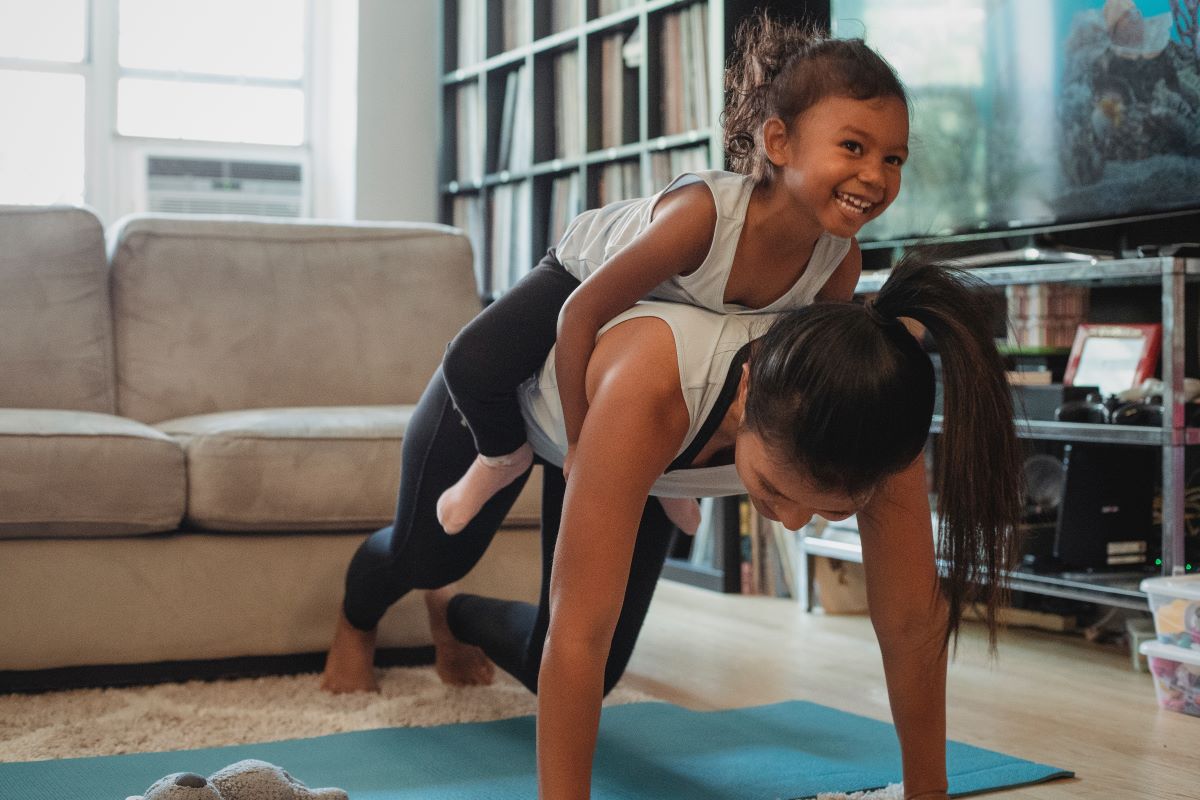
Inviting my children to join my workouts transformed resistance into connection. They enjoy copying my movements and counting repetitions out loud. Their enthusiasm adds energy to the session.
We turn planks into friendly competitions and lunges into imaginative games. Instead of viewing exercise as time away from them, I see it as shared activity. That shift reduces guilt and builds healthy habits for them as well.
Including my kids also teaches them that movement is normal and enjoyable. They grow up seeing exercise as part of daily life rather than punishment.
Setting Realistic Weekly Goals
Rather than aiming for perfection, I set achievable targets. Three to four workouts per week feel manageable. Some weeks exceed that number, and others fall slightly short.
Flexibility prevents discouragement. If life becomes chaotic, I adjust rather than abandon the plan entirely. A shorter workout still counts toward my goal.
This balanced approach keeps motivation steady. Over time, those consistent efforts produce noticeable strength and endurance improvements.
Tracking Progress Without Obsession
Progress tracking helps me stay accountable, but I avoid becoming consumed by numbers. I pay attention to how my clothes fit and how I feel rather than obsessing over a scale. Energy levels and mood shifts often indicate improvement before visible changes appear.
I also track small milestones. Holding a plank longer or completing more push-ups than last month feels rewarding. Celebrating these wins reinforces positive habits.
Simple workouts you can do at home deliver results when practiced consistently. Recognizing progress keeps me engaged and encourages me to continue.
Prioritizing Safety and Form
Working out at home requires mindfulness about technique. Without an instructor present, I focus carefully on proper alignment. Slow, controlled movements reduce the risk of strain.
If I feel sharp pain, I stop and reassess. Pushing through discomfort is not a badge of honor. Protecting my body ensures that I can continue exercising long term.
I occasionally follow reputable online videos for guidance. Visual demonstrations help me refine form and explore new routines safely.
Making It Enjoyable
Enjoyment determines sustainability. If I dread a routine, I am less likely to repeat it. Music, variety, and realistic expectations keep my workouts engaging.
I rotate exercises to prevent boredom. Some weeks emphasize strength, while others include more cardio or flexibility. That variety challenges different muscle groups and keeps things fresh.
Exercise becomes an act of self-care rather than punishment. Viewing movement as a privilege rather than an obligation transforms my attitude entirely.
Final Thoughts
Finding ways to stay active within my home reshaped my perception of fitness. Simple workouts you can do at home eliminate common barriers like travel time and expensive memberships. They fit seamlessly into busy schedules and adapt to changing seasons of life.
Short, consistent sessions build strength, boost energy, and support mental clarity. Progress does not require perfection or elaborate setups. It requires willingness and persistence.
By embracing flexibility and creativity, I discovered that my living room can be just as effective as any gym. Movement is no longer something I postpone for someday. It is woven into my daily rhythm, empowering me to care for my body while fully embracing motherhood.
